


Speech Development Support for Growing Voices
We help children develop clear, confident speech through personalized, play-based therapy tailored to their unique needs. Our services address articulation, voice, and fluency, with a focus on meaningful progress that carries over into everyday communication.
What is Speech Therapy for Children?
Speech therapy supports children in developing clear, confident communication so they can express themselves and be understood in everyday life.
At Chitter Chatter Speech Co., we focus on key areas such as speech sound development (articulation), fluency (including stuttering), and voice quality—helping each child build the skills they need to communicate with ease.
Every session is thoughtfully tailored to your child’s unique needs. Using engaging, evidence-based and play-based techniques, we create meaningful opportunities for growth in a supportive, encouraging environment where children feel comfortable and successful.
Our goal is simple: to help your child communicate with clarity, confidence, and joy.
Articulation Improvement
Helping children produce speech sounds clearly and speak with confidence through fun and interactive exercises.
Voice Quality
Supporting healthy voice use by addressing pitch, volume, and vocal strain to promote clear, comfortable speaking.
Fluency & Stuttering Support
Helping children develop smoother, more confident speech while reducing frustration and building communication confidence.
Early Speech Intervention
Using play-based, developmentally appropriate strategies to support early speech skills and prevent future communication challenges.
Phonological Development
Addressing sound pattern errors (like “tat” for “cat”) to improve overall speech clarity and age-appropriate sound use.
Motor Speech Support (Apraxia)
Helping children who know what they want to say but have difficulty coordinating their speech. We use targeted, engaging strategies to build clearer, more consistent communication.
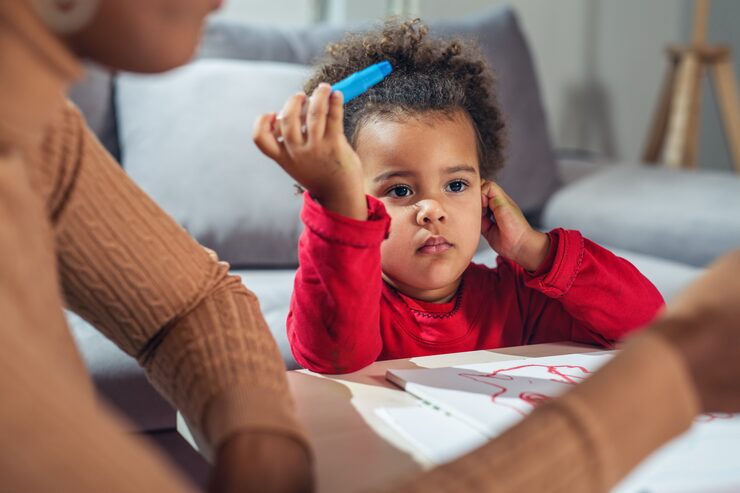
Is Your Child Experiencing Speech or Language Delays?
Every child develops at their own pace—but certain signs may indicate your child could benefit from additional speech.
Signs to Look For:
• Late talker — not using sounds or words as expected for their age
• Difficulty pronouncing sounds — speech may be unclear or hard to understand
• Frequently leaving out or substituting sounds (e.g., “tat” for “cat”)
• Stuttering or getting “stuck” on sounds or words
• Unusual voice quality — voice may sound hoarse, breathy, or strained
If you notice any of these signs, you’re not alone—and early support can make a meaningful difference in your child’s clarity, confidence, and ability to be understood.
Speech Milestones –
These milestones provide a general guide for how speech skills typically develop as children grow. Every child develops at their own pace, but if your child is not meeting these milestones or is difficult to understand, additional support may be beneficial. We’re here to help guide you every step of the way.
By 12 Months
Begins using a variety of speech-like sounds (babbling with different consonants like b, m, d) and may say simple words like “mama” or “dada.”
By 18 Months
Uses several single words and continues to develop a wider range of speech sounds through babbling and early word attempts.
By 2 Years
Speech is understood by familiar listeners about 50% of the time; begins combining sounds more clearly in simple words.
By 3 Years
Speech is understood by others about 75% of the time; most vowel sounds and several consonants are produced correctly
By 4 Years
Speech is mostly understood (close to 100%), though a few sound errors may still be present.
By 5 Years
Produces most speech sounds correctly, with clear, easily understood speech in everyday conversation
The Connection Between Speech & Social Development
Typical vs. Non-Typical Stuttering
Typical (Developmental) Disfluencies
• Occur occasionally, especially during language “growth spurts”
• Repeating whole words or phrases (e.g., “I want, I want that”)
• Speech remains relaxed, without visible tension or struggle
• Child is usually unaware or not frustrated
Non-Typical (Concerning) Disfluencies
• Frequent or worsening over time
• Repeating sounds or parts of words (e.g., “b-b-b-ball”)
• Prolonging sounds (e.g., “sssssun”)
• Visible tension (eye blinking, facial strain, body movements)
• Child shows frustration, avoidance, or awareness
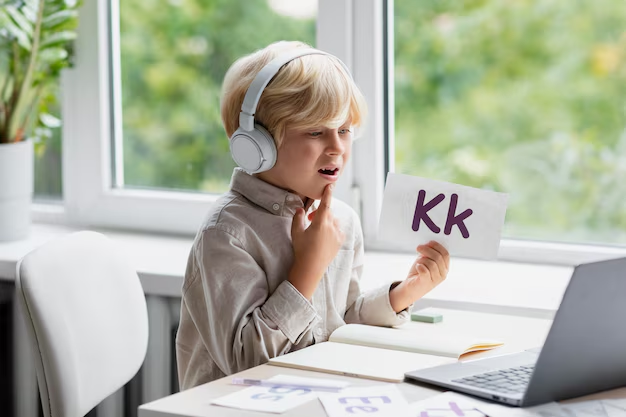
Speech Evaluations
• Initial Case History
We begin by gathering a brief background, including medical, developmental, educational, social, and family history, to better understand your child as a whole.
• Personalized Assessment
We administer carefully selected, individualized assessments that target your child’s specific areas of concern, including articulation, fluency, and voice.
• Results & Recommendations
Following the evaluation, your Speech-Language Pathologist will interpret the results and provide a detailed report outlining recommendations and next steps.
When to Seek Support
Early intervention can make a meaningful difference in a child’s communication, confidence, and long-term academic success. Addressing concerns early allows children to build foundational skills during critical stages of development.
Research shows that children learn communication skills most effectively during the early developmental years. Identifying concerns early and providing support can help children gain skills that positively impact home, school, and social environments.
At Chitter Chatter, we believe that early support should feel encouraging, personalized, and family-centered. Our play-based and child-centered approach helps children build communication skills in ways that are engaging, meaningful, and supportive of their individual strengths.